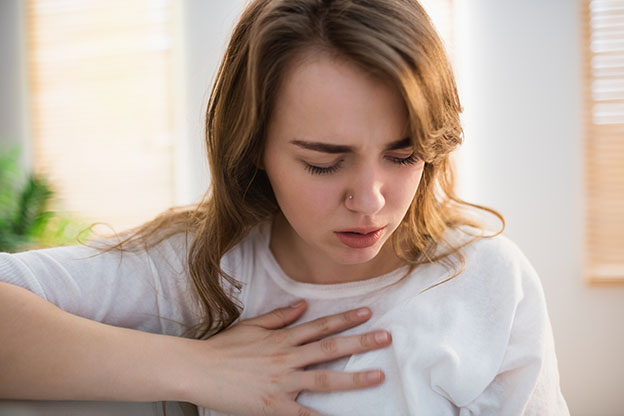
Heart palpitations can be really scary, especially if you don’t know what they are. The first time you experience palpitations can come with the panic of thinking you’re having a heart attack or that something is seriously wrong with your heart. However, the truth is that palpitations are missed heartbeats, called arrhythmias, and are related to the electrical impulses that causes your heart to beat. The good news is that infrequent palpitations are usually not a sign of serious illness.
A rule of thumb is that if you have occasional palpitations, congratulations—you’re not alone. Most doctors will tell you that everyone misses a heartbeat now and then, but most of us don’t feel it happening. However, if you have frequent palpitations, several missed beats in a row, if it causes lightheadedness or dizziness, or if you feel like your heart is racing, you should definitely get it checked out by your doctor.
In Chinese medicine, palpitations are also related to your heart, which should come as no surprise. However, your heart organ system is more far-reaching in Chinese medicine, which can give palpitations a different and interesting dimension.
While your Chinese heart circulates blood throughout your body, it also has a very spiritual and emotional function. Considered to be the home of your Shen, or spirit, your heart is responsible for your thoughts, feelings, memories, emotions, and your spiritual self.
We instinctively know that our hearts are an emotional organ. You can have a broken heart, feel heartsick, follow your heart, and thank someone from the bottom of your heart. It follows, then that whenever you have an emotional upset, your heart is involved.
In Chinese medicine, the emotional connection to your heart is always a consideration in diagnosing palpitations. In many cases palpitations can be brought on by stress, an emotional upset, and even working too hard. Often palpitations are accompanied by anxiety, insomnia, memory issues, dizziness, and ringing in your ears. There are a number of patterns, or clusters of symptoms, that are related to palpitations, and a practitioner of acupuncture and Chinese medicine will need to understand the nature of those symptoms in order to treat your palpitations effectively.
There are also a number of physical issues that may cause or aggravate your palpitations, including:
- Medications. Several prescription and over-the-counter medicines have the ability to cause palpitations. Read the information on side effects that comes with your medications, check with your doctor, or talk to your pharmacist if you suspect a medication you’re taking is causing palpitations.
- Take stock of your caffeine consumption. Caffeine speeds things up, including your heart, and can cause palpitations.
- Monitor your drinking, too. Alcohol abuse can be a source of palpitations in some people.
- If you smoke, quit now. You already know that smoking isn’t good for your heart or lungs, but may not know that it can cause heart arrhythmias. Clearly, quitting smoking is easier said than done, especially if you’ve smoked for a long time. However, if you decide to quit, acupuncture can help you by decreasing the intensity and frequency of cravings and managing stress.
- While exercise is a good thing, make sure you start slowly. Jumping into a hard workout without any warmup can be a trigger for palpitations.
- If you’re under a lot of stress, do whatever it takes to manage it. Stress and emotional upsets can trigger or aggravate palpitations.
- Avoid overeating. If you’re prone to palpitations or arrhythmias, episodes of overeating can overload your heart and trigger an episode.
 Daniel Melton is a California board certified acupuncturist and herbalist. He earned a B.S. in biology, completed his Masters in Traditional Chinese Medicine, and is the founder of Melton Acupuncture in Morgan Hill, CA.