Based upon Taoist meditation practices, the Inner Smile Meditation can have profound effects on your body and mind. This simple meditation suggests that you “smile” to all of your internal organs and glands. It is a way of saying “thank you” to your body for working 24 hours, 7 days a week!
Focusing your attention and smiling in this way can calm the autonomic nervous system, revitalize the internal organs, and increase the flow of blood and Qi.
Below is the Inner Smile Meditation for the main Meridian Organ Systems. For more information, please refer to Mantak Chia’s book, Taoist Ways to Transform Stress into Vitality.
Choose a quiet spot and keep warm throughout the meditation. Sit comfortably at the edge of a chair, feet flat on the ground with your back straight. Breathe deeply and relax. Clasp your hands together, left hand on bottom and right hand on top, palms touching, and rest them in your lap.
Close your eyes and feel a connection between the soles of your feet and the ground.
Focus on the midpoint between your eyebrows. Place the tip of your tongue on the roof of your mouth, just behind your front teeth. Put a smile on your face and journey down to the wonderfully amazing body that keeps you alive, alert and active.
Heart -See your heart as a vibrant red color. Focus the energy of “joy” into your heart. Feel it pulse with love. Breathe in and exhale with the sound of HAW.
Lungs – Radiate the feeling in your heart to your lungs. Picture your lungs as pure white. Focus on letting go of sadness and grief. Exhale with the sound of SSSSSS.
Liver – Keep the feeling spilling over into your liver, which is just under your ribs on the right side. Picture it as a vibrant grass-green. When exhaling, let go of anger and frustration with the sound of SHHHH.
Spleen – Continue to the left, under the ribs. Shine a vibrant yellow color into this organ. When you exhale, let go of overthinking and worry, and use the sound of WHOO.
Kidney – Focus your attention on your lower back, just below and under your ribs. Imagine a deep blue-purple light. Breathe in courage and exhale fear. When you exhale, use the sound of WOOO.
Once you have traveled through your body, begin to focus your attention on your navel. Smile down to your navel, and focus your attention there.
Mentally move the energy in a spiral at the navel 36 times. Women start the spiral counterclockwise, men start it clockwise. Next, reverse the spiral direction and bring the energy back into the navel, circling 24 times. You can use a finger to guide the spiral motion.
It is ok if you don’t know the exact locations of your organs. Just bringing awareness to your organs is benefit enough. Your body will love you just the same.
Perform each exercise 9 times, twice a day. These exercises can affect your body and mind, so it is advisable to consult with your healthcare provider.

 For people with psoriasis, suffering from painful symptoms like inflamed, flaking and red skin is not pleasant. The chronic skin condition is due to an overactive immune system that can be triggered by a number of internal and external factors. Many Western treatments include steroid creams and oral medications that come with a slew of unwanted side effects.
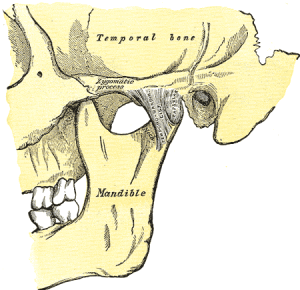 Commonly known as TMJ, temporomandibular joint pain affects over 10 million Americans and can involve difficulty chewing, jaw muscle stiffness and painful popping or clicking, according to the National Institute of Dental and Craniofacial Research.
 Many of us have already experienced or will experience some amount of hearing loss. This can be due to aging or noise-induced factors. Exposure to loud sound over time can permanently damage the ears and result in hearing loss.


